
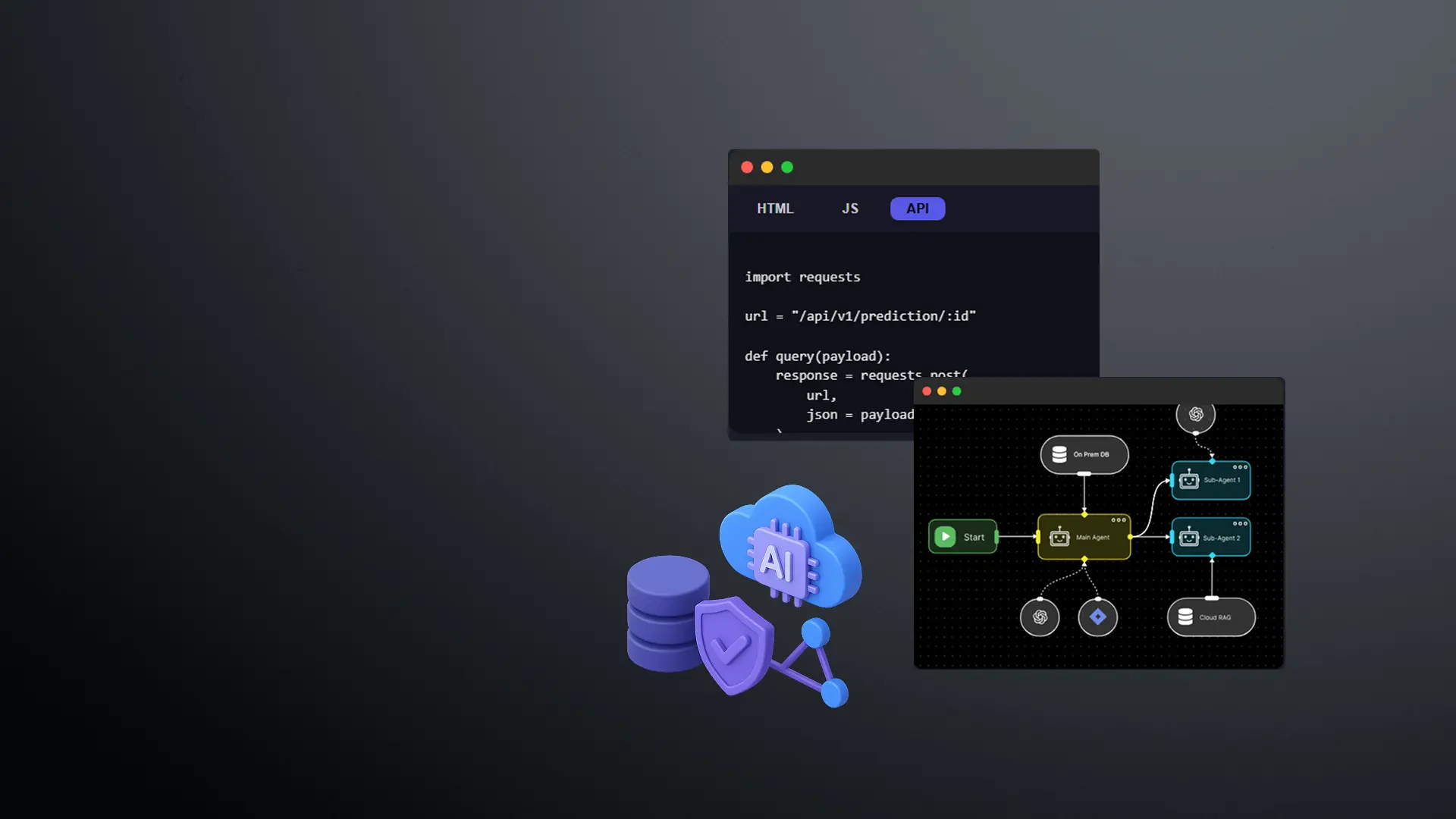
Cases / AICaaS
AI adoption fails whensystems are too complex to use.
A no-code platform for GDPR-compliant AI integration.
We wanted to solve a problem we kept seeing with clients: AI integration is too complicated. Not technically impossible, but economically unfeasible for most companies – too expensive, too slow, too many dependencies. AICaaS was meant to change that: A platform where anyone can build their own AI assistants and integrate them into websites or software without coding skills. In 15 minutes. GDPR-compliant. Without a developer team.
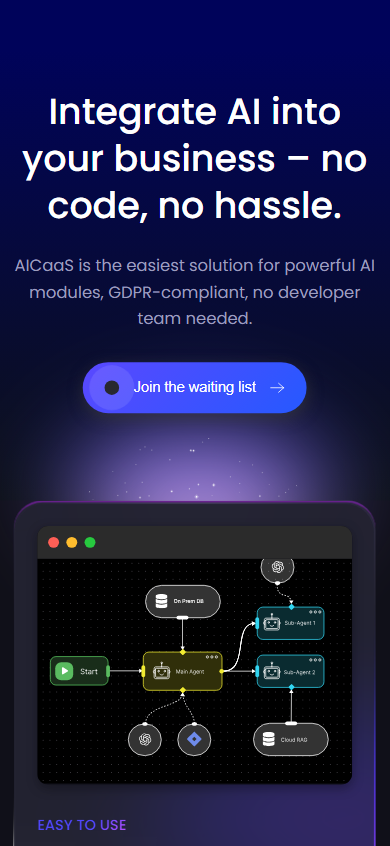
Integrate AI into your business – without code, without hassle.
We wanted to solve a problem we kept seeing with clients: **AI integration is too complicated.** Not technically impossible, but economically unfeasible for most companies – too expensive, too slow, too many dependencies.
AICaaS was meant to change that: A platform where anyone can build their own AI assistants and integrate them into websites or software without coding skills. In 15 minutes. GDPR-compliant. Without a developer team.
**Spoiler:** The product was never realized. But the journey – the strategic planning, architecture, and GDPR compliance concepts – was educational.

1. Feature Set & User Flows
No-Code Editor
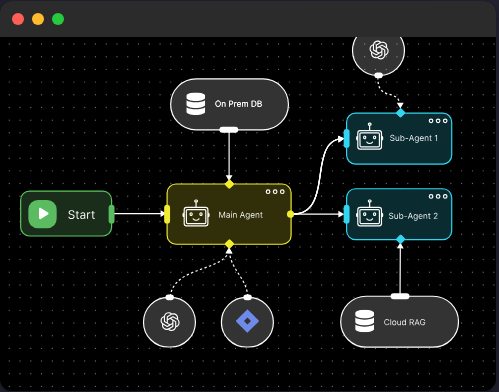
Drag & Drop interface for AI module creation
Predefined templates for typical use cases
Visual Flow Builder for complex logic
Developer Integration
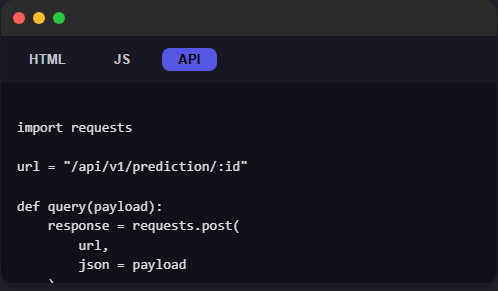
Export as API, JavaScript snippet, or plug-in
Integration with Webflow, WordPress, Shopify, Custom Apps
Webhook support for automations
Team Features
Roles & permissions (Admin, Editor, Viewer)
Versioning & rollback
Audit logs for compliance
2. GDPR Compliance Scenarios
We thought through **two strategic paths**:
Option A: GDPR-compliant with EU Models
Hosting in EU (Frankfurt, Amsterdam)
On-premise option for Enterprise
No data usage for AI training
Strict data residency
Option B: Non-GDPR with Big Tech (USA)
OpenAI, Google, Azure (US servers)
Faster go-to-market
Higher risk for EU customers
**Decision:** Option A – long-term competitive advantage through GDPR-first approach.
3. Technical Architecture
- 01**Frontend:** Vue.js / Nuxt 3 (SSR for SEO)
- 02**Backend:** Node.js / Express (API-First)
- 03**Database:** PostgreSQL (Relational + JSONB)
- 04**AI Layer:** Model-agnostic adapter architecture
- 05**RAG:** Vector DB for custom data (Pinecone / Weaviate)
- 06**Infrastructure:** Docker + Kubernetes for scaling
- 07**Hosting:** Hetzner Cloud (EU) or AWS Frankfurt
4. Dependencies & Risks
- 01**LLM Provider:** Dependency on OpenAI, Anthropic, etc.
- 02**Costs:** Variable costs through token consumption
- 03**Regulation:** AI Act, GDPR changes
- 04**Competition:** Major players (Zapier, Make.com) could enter market
Validated Use Cases
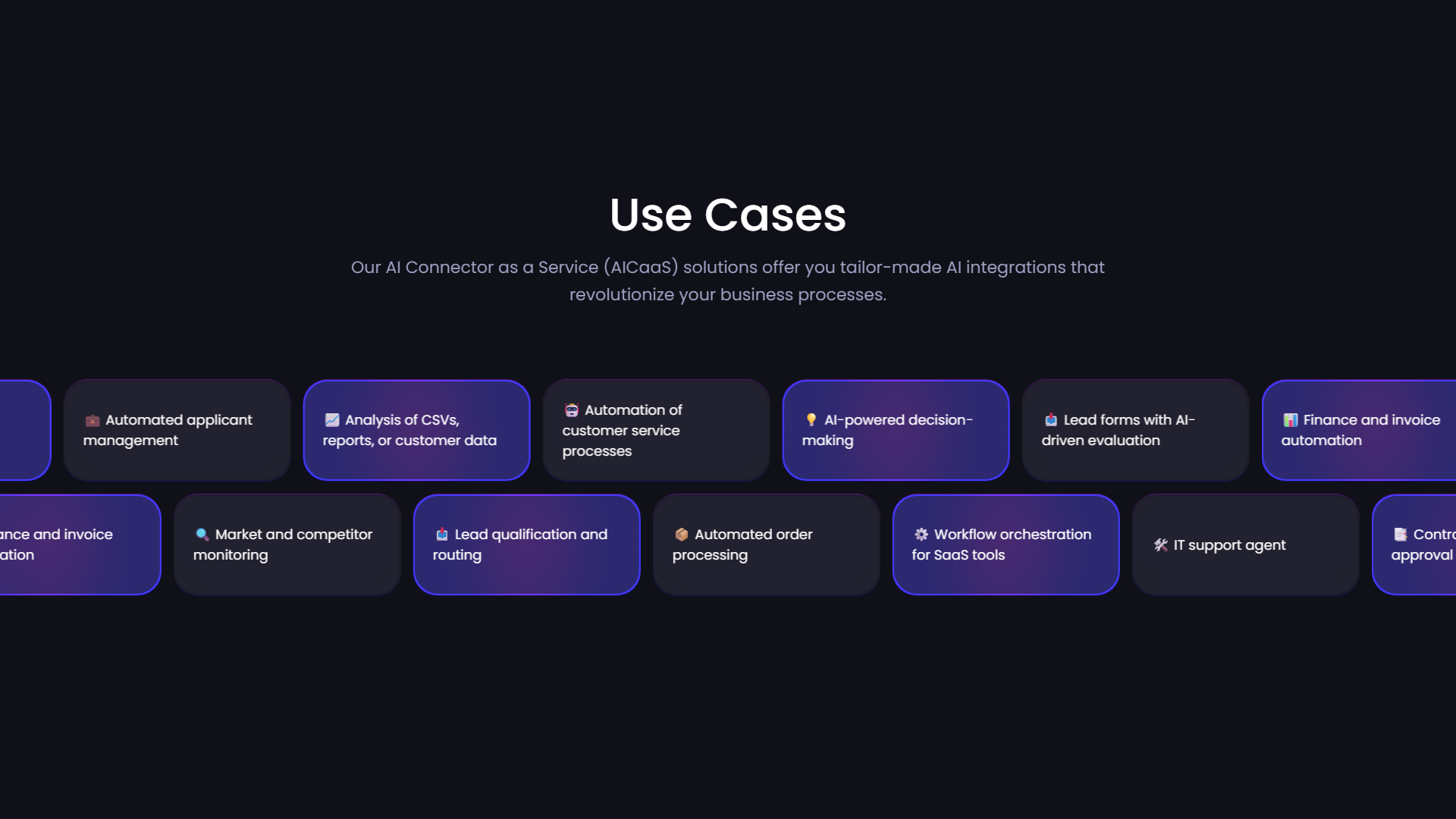
- 01🛒 **Shop Owners:** Product chatbot advises based on catalog
- 02📚 **Chatbots** with company knowledge
- 03📄 **Law Firms:** Contract generator based on templates
- 04📈 **Data Analysis** and visualization (CSVs, reports, customer data)
- 05💼 **Applicant Management** automation
- 06🤖 **Automation** of customer service processes
- 07📥 **Lead Forms** with AI evaluation
- 08📊 **Finance & Invoice Automation**
- 09🔍 **Market & Competitive Monitoring**
- 10⚙️ **Workflow Orchestration** for SaaS tools
- 11🛠️ **IT Support Agent**
- 12📑 **Contract Review & Approval**
Differentiation vs. Competition
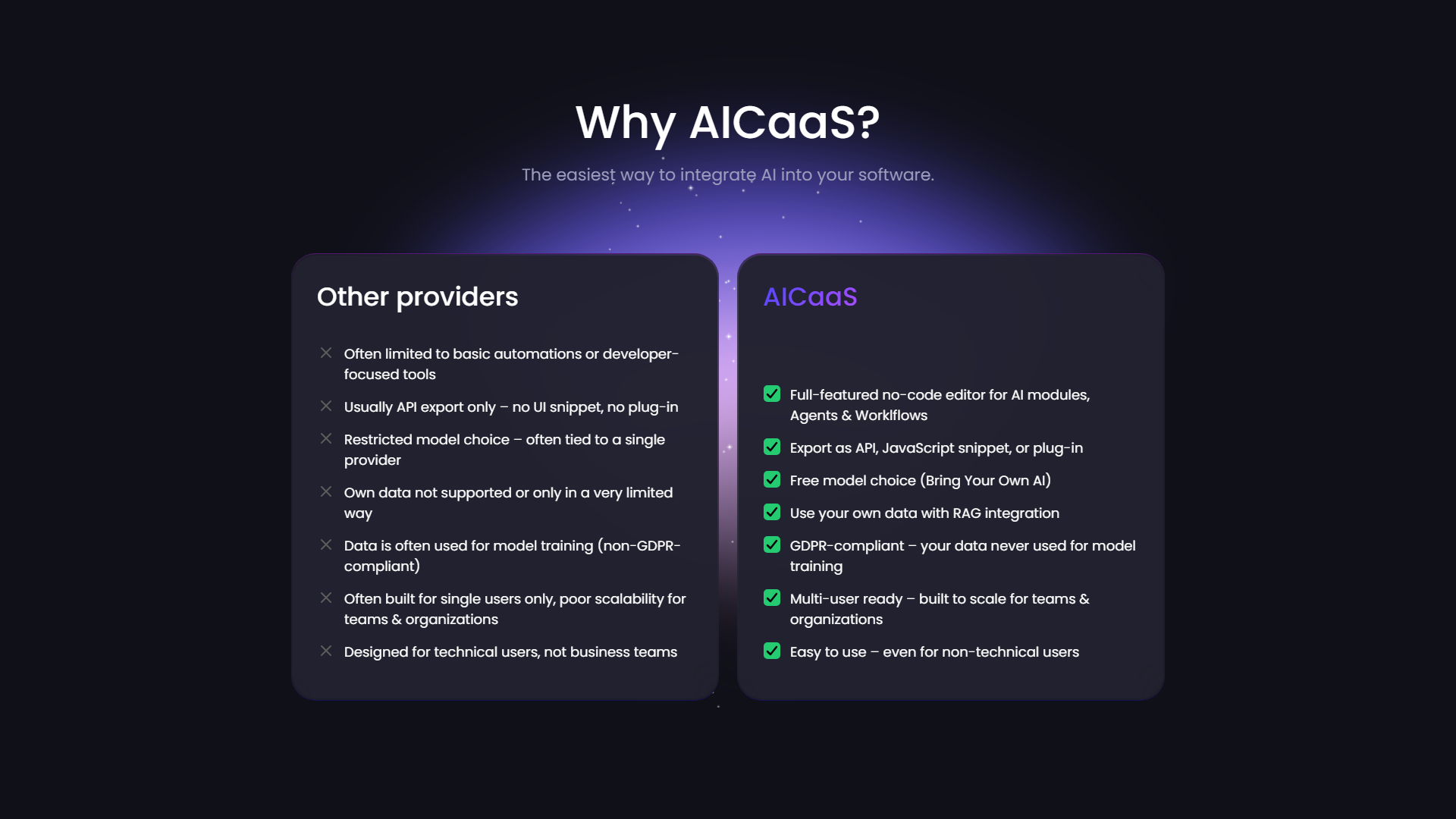
**Editor:** Other providers offer mostly automations or developer tools → AICaaS provides a full no-code editor for AI modules
**Export:** Often API-only → API, JavaScript snippet, and plug-in
**Model Choice:** Usually one provider → Free AI model choice (BYO-AI)
**Own Data:** Barely usable → RAG integration for custom database
**GDPR:** Data often used for training → No training usage, EU hosting
**Scaling:** Single user → Multi-user for teams
**Target Group:** Tech-savvy → Also for non-technical users
MVP Cut & Business Plan
MVP Features (Version 1.0)
1. No-Code Editor (Basic)
2. 3 AI Providers (OpenAI, Claude, Open Source)
3. Export as JavaScript snippet
4. Single-user mode
5. 5 predefined templates
**Effort:** 6 months development, 2 people
€170kYear 1 Investment
€300kYear 3 ARR Target
18-24moBreak-even
Cost & Revenue Planning (3-5 Years)
**Year 1:** Development costs: €120,000 · Marketing & Sales: €40,000 · Infrastructure: €10,000 · **Total:** €170,000
**Revenue Forecast Year 3:** 500 paying users (€50/month) = €300,000 ARR · Break-even after 18-24 months
EU Funding
We prepared a **Horizon Europe application**: Deep Tech Innovation Grant · GDPR-compliant AI infrastructure · Funding amount: €250,000 · **Problem:** Lead time 12-18 months
Why the Project Was Stopped
**The Reality:** Without funding, we couldn't bridge the 6-12 months until the EU funding decision. Bootstrapping wasn't an option for a project of this size.
**Long lead times** for EU funding (12-18 months) + **competitive market** (Zapier, Make.com expanding into AI) + **lack of VC funding** = **Project cancellation**.
We designed everything – features, architecture, GDPR scenarios, roadmap, financial plan. But without capital, the product never made it out of the planning phase.
What We Learned
- 01**Validation first:** Before planning for 4 months, test with real users for 4 weeks
- 02**Funding before development:** No bootstrapping Deep Tech without runway
- 03**EU funding is slow:** 12-18 months lead time is reality
- 04**GDPR is competitive advantage:** But only if you have the funding to implement it
- 05**Architecture knowledge remains:** Even without a product – we use the strategic learnings today
How Clients Benefit
The learnings from AICaaS flow directly into our client projects:
**AI Integration:** We know how to meaningfully integrate LLMs – not as a gimmick, but as real business value
**No-Code Mindset:** Wherever possible, we build solutions that clients can customize themselves
**GDPR Expertise:** Data protection isn't an afterthought, but planned from the start
**RAG Implementation:** Connect company data with AI – securely and performantly
“AICaaS was our most expensive learning course – but every client benefits from this knowledge now.”
ctaBanner.title ctaBanner.titleSecondary
ctaBanner.subtitle